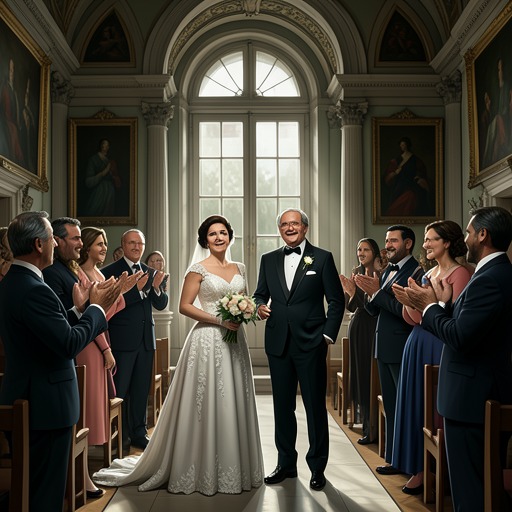
Doña Blanca de Urbino
Love in the Time of CholeraDoña Blanca de Urbino is Juvenal Urbino’s widowed mother and a formidable presence in the family home. Her authority shapes the first years of Fermina Daza’s marriage: the palace of Casalduero becomes a household governed by old family customs, criticism, and Doña Blanca’s bitterness. Her death, years later, brings Juvenal and Fermina back from Paris and marks a decisive turn toward a home Fermina can command.
Identity and Household Authority
Doña Blanca had once been the animating force of her social world, a woman of intelligence and unusual human sensitivity whose vitality had inspired even skeptics. Widowhood changed her. She became embittered and withdrew from the generous life she had once sustained, directing her rancor at her husband’s decision to sacrifice himself for the poor rather than survive for her.
That grief hardened into power inside the family. Juvenal, though professionally authoritative and socially assured, could not bring himself to oppose his mother. His deference left Fermina facing the household’s rules largely alone, and the narrator locates responsibility for her confinement not simply in Doña Blanca’s conduct but in her son’s failure to intervene.
Conflict with Fermina Daza
After the honeymoon, Fermina returned to the palace of the Marquis de Casalduero with eleven chests of belongings, only to feel she had entered the wrong house. The oppressive years that followed were defined by her mother-in-law’s bitterness, her sisters-in-law’s lethargy, and Juvenal’s unwillingness to heed her pleas. Fermina came to see her husband, rather than the women who ruled the household, as responsible for the trap because he had the power to help and would not use it.
Doña Blanca’s influence also reached into ordinary domestic rituals. She criticized Fermina’s manners, dress, walking, and way of nursing her child, and objected when Fermina served fashionable English-style tea and sweets instead of the customary chocolate, aged cheese, and cassava bread. Even Fermina’s account of a dream was policed: Doña Blanca cut her off with the judgment, “A decent woman cannot have that kind of dream.” The household’s formality thus became a means of disciplining Fermina’s conduct and sensibility, not merely a difference in taste.
Death and Aftermath
The period of conflict did not last forever, but its end came through separation from the palace rather than reconciliation with Doña Blanca. After Fermina and Juvenal had spent two years in Paris beginning to recover what remained of their love, a telegram announced that Doña Blanca was gravely ill; another soon reported her death. The couple returned without delay. Fermina was pregnant, and the news of her condition became the subject of a popular song that Juvenal later requested at Social Club dances as proof of his good humor.
The palace was sold, and Juvenal’s sisters went to live in seclusion at the Convent of the Salesians. Fermina remained in her father’s old house until the villa in La Manga was ready, then entered it prepared to command. Doña Blanca’s death therefore altered the family’s living arrangements as well as ending her direct authority over Fermina.
Narrative Significance
Doña Blanca’s role is defined by the contrast between the vitality attributed to her earlier life and the bitterness of her widowhood. Her history helps explain the household’s rigidity, but the marriage’s crisis is not reduced to a conflict between two women: Juvenal’s passivity allows his mother’s authority to become an enclosure for Fermina. The later move to La Manga reverses that domestic arrangement. There, Fermina becomes mistress of her own home, and the couple’s renewed life takes shape beyond the palace that had held her for six years.